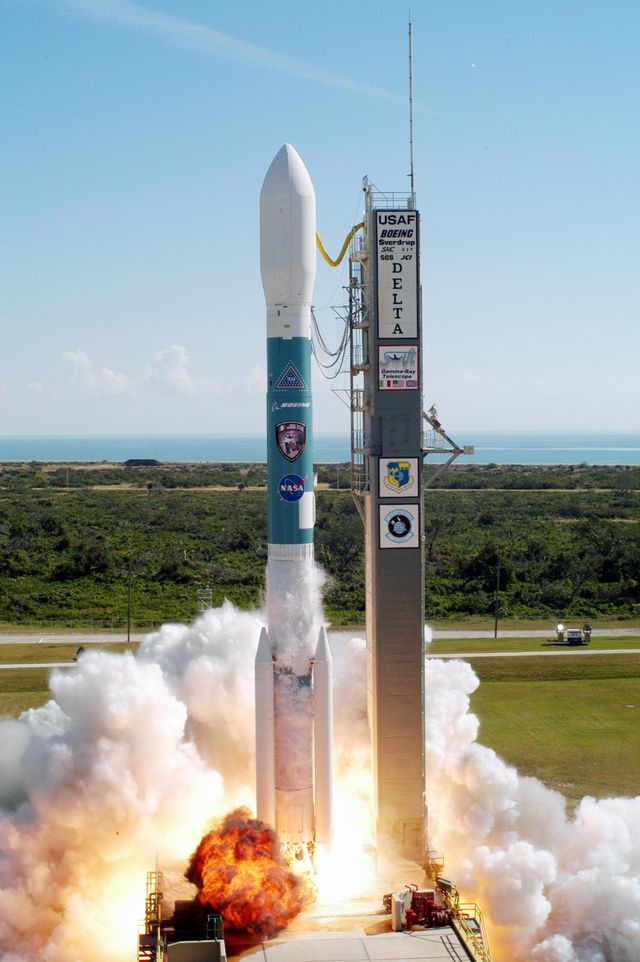
Success
Delta II | NOAA 18
NOAA-18, known before launch as NOAA-N, is a weather forecasting satellite run by NOAA. NOAA-N (18) was launched on May 20, 2005, into a sun-synchronous orbit at an altitude of 854 km above the Earth, with an orbital period of 102 minutes. It hosts the AMSU-A, MHS, AVHRR, Space Environment Monitor SEM/2 instrument and High Resolution Infrared Radiation Sounder (HIRS) instruments, as well as the SBUV/2 ozone-monitoring instrument. It is the first NOAA POES satellite to use MHS in place of AMSU-B. NOAA-18 also hosts Cospas-Sarsat payloads.
Mission type: Earth Science · Orbit: Sun-Synchronous Orbit
Rocket: Delta II · Provider: United States Air Force
Launch pad
Space Launch Complex 2W, Vandenberg SFB, CA, USA · View on map (opens in new tab)